
PETG vs ASA vs ABS: Which 3D Printing Material Should You Choose?
Picking between PETG, ASA and ABS is one of the most common questions we get at our Bangalore workshop, and the wrong choice usually shows up months later as a warped, faded or cracked part. This guide compares the three on the things that actually matter (heat, sunlight, chemicals, toughness and finish), and shows what we print in each. If you are still scoping a project, our complete guide to 3D printing services in Bangalore covers the full process, from file to finished part.
Reading contents:
- Quick comparison: PETG vs ASA vs ABS (and PLA)
- What do PETG, ASA and ABS actually mean?
- PETG vs ABS: Impact Toughness vs High Heat
- ASA vs ABS: The Outdoor Weatherproof Factor
- PETG vs ASA: Chemical Contact vs UV Stability
- How to choose in 30 seconds
- Why Indian conditions change the answer
- What we actually print in each material at Sculptex
- Printing notes: what to expect
- Frequently asked questions
- Not sure which material your part needs?
Quick comparison: PETG vs ASA vs ABS (and PLA)
Before diving into the chemistry, here is how the three main engineering polymers stack up against standard PLA across everyday manufacturing criteria:
| Property | PLA | PETG | ASA | ABS |
|---|---|---|---|---|
| Heat resistance | Low (softens around 55–60°C) | Medium (around 70–80°C) | High (around 95–100°C) | High (around 95–100°C) |
| Sun / UV resistance | Poor | OK | Best | Poor |
| Chemical and oil resistance | Poor | Very good | Good | Good |
| Toughness / impact | Brittle | Very good | Good | Good |
| Surface finish and sanding | Good | Fair (glossy, hard to sand) | Very good | Very good |
| Ease of printing | Easiest | Easy | Moderate (needs enclosure) | Moderate (needs enclosure) |
| Best for | Prototypes, display models | Functional parts, chemical contact | Exterior and outdoor parts | Finished, post-processed parts |
*Temperatures are approximate softening points and vary by brand and print settings. Treat them as a guide, not a guarantee.
What do PETG, ASA and ABS actually mean?
ABS (Acrylonitrile Butadiene Styrene): ABS is the classic engineering plastic. It is strong, heat-resistant and easy to sand, glue and paint, which is why it has been used for everything from car interiors to toy bricks. Its big weakness is sunlight: ABS yellows, turns brittle and cracks with long UV exposure, so it is a poor choice for exterior parts.
ASA (Acrylonitrile Styrene Acrylate): ASA is ABS's outdoor-proof cousin. It has similar strength and heat resistance, but it is formulated to sit in the sun for years without fading or cracking. If a part will live on the outside of a car or bike, or anywhere it sees direct sunlight, ASA is usually the right answer.
PETG (Polyethylene Terephthalate Glycol): PETG is the tough all-rounder. It prints almost as easily as PLA, yet it takes real abuse: knocks, vibration, oils and cleaning chemicals. It flexes slightly before it breaks instead of snapping, which makes it a great choice for brackets, housings and guards. It has lower heat resistance than ABS or ASA, so keep it away from engine bays and sun-baked dashboards.
PETG vs ABS
PETG is easier to print, tougher under impact and more resistant to oils and chemicals. ABS handles more heat and is much easier to sand, smooth and paint.
Choose PETG for functional parts that get handled, knocked or exposed to lubricants and solvents.
Choose ABS when high ambient heat resistance (above 80°C) and a paintable, acetone-smoothed finish matter more than chemical resistance.

ASA vs ABS
ASA and ABS are nearly twins in mechanical strength, heat resistance, and finishing versatility. The critical difference is weather and ultraviolet radiation.
ASA keeps its rich color and structural integrity under constant sunlight, while standard ABS degrades, fades, and micro-fractures after months of UV exposure. If the part will ever sit outside or behind glass in the sun, pay the small premium for ASA. If it lives permanently indoors or inside a sealed enclosure, ABS is a solid, economical choice.
PETG vs ASA
ASA wins on heat deflection (up to 100°C) and long-term UV radiation resistance. PETG wins on drop toughness, elongation before break, chemical resistance, and ease of printing without warping.
For an outdoor automotive trim or exterior mounting arm, choose ASA. For a machine bracket that sees fuel, oil, chain lube, or cleaning fluids, choose PETG.
How to choose in 30 seconds
Follow this straightforward decision tree when selecting filaments for your prototype or end-use component:
- Part sits in sunlight or outdoors? → Choose ASA
- Part touches oil, fuel, or cleaning chemicals? → Choose PETG
- You will sand, paint, or acetone-smooth it? → Choose ABS or ASA
- Part sits in a hot car cabin or near an engine bay? → Choose ASA or ABS (never PLA, and not PETG)
- One-off visual prototype where appearance beats durability? → Choose PLA or PETG
- High structural load, must survive extreme mechanical stress? → Choose Carbon fiber composite (PA-CF / PETG-CF)
Why Indian conditions change the answer
Material datasheets are usually written for mild climates. In India, a parked car can push cabin and dashboard temperatures well past 70°C, and exterior parts take months of intense direct sun and monsoon moisture. PLA will deform in those conditions, and ABS will slowly degrade in the sun.
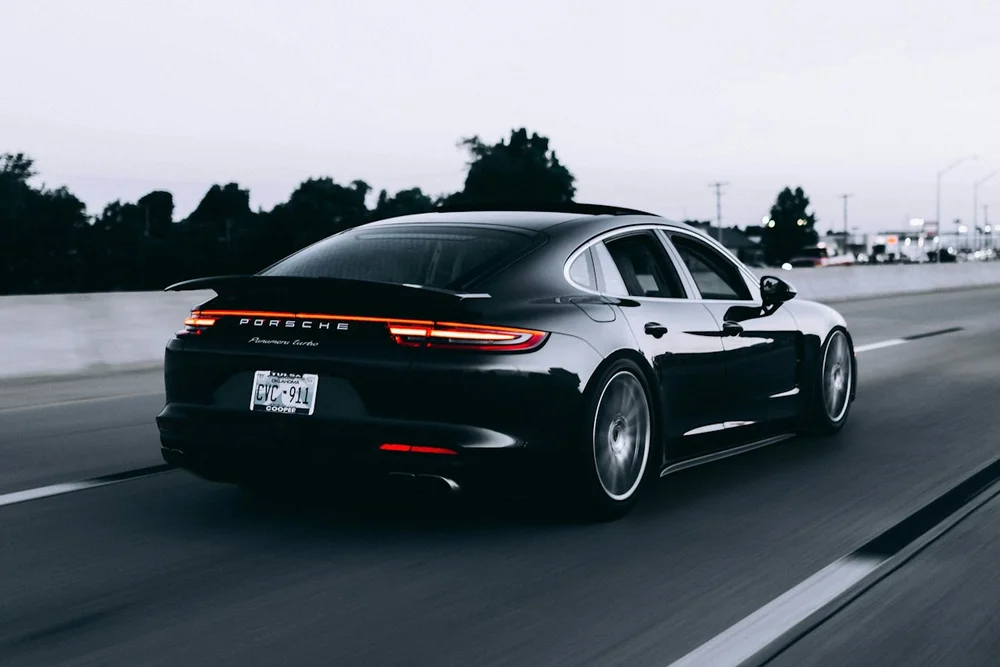
That is why we default to ASA for anything exterior and to ABS or ASA for anything inside a closed vehicle. For more on what suits vehicle use, see 3D printed automotive parts: what can you actually make?
What we actually print in each material at Sculptex
Here is where each material earns its place in our Bangalore workshop:
- ABS: custom intake manifolds and battery enclosures that need heat stability and a smooth, paintable finish.
- ASA: exterior trims and tank accessories that bake in Indian summer sun without warping or fading. This is the material behind many of our Royal Enfield custom parts.
- PETG: functional brackets, switch housings and guards that take daily wear and chemical exposure.
- Carbon fiber composite: production-grade brackets where strength and stiffness beat everything else.

Printing notes: what to expect in production
ABS and ASA: Both require a heated, sealed build chamber (50°C–65°C chamber temperature) and controlled active ventilation. Without an enclosure, cooling drafts cause catastrophic layer delamination and bed warping. They also release styrene fumes during extrusion, which is why commercial studio printing is safer and far more reliable than printing at a home desk.
PETG: Forgiving and does not require an enclosure, but it is notoriously hygroscopic (absorbs moisture from humid air). Wet PETG results in excessive stringing, bubbling, and weak layer adhesion—a major consideration during the Indian monsoon. All Sculptex PETG is stored in climate-controlled desiccant cabinets and baked prior to slicing.
Finishing & post-processing: ABS and ASA sand effortlessly, take automotive primer, and can be chemical-smoothed with acetone vapor to achieve a near-injection-molded surface. PETG is inherently glossy, ductile, and difficult to sand, so it is typically left with its natural as-printed finish.

Not sure which material your part needs?
Send us your CAD file, or even a sketch, and tell us where the part will be used. We will recommend the right material and quote the print. Working on something confidential? We also offer NDA-protected 3D printing. New to the process? See how we prototype a product idea in 5 steps, or read our complete guide to 3D printing services in Bangalore.
Frequently Asked Questions
Is PETG stronger than ABS?+
PETG is usually tougher, meaning it absorbs sudden impact and mechanical shock without cracking. ABS is more rigid and handles higher temperatures (up to 100°C vs 75°C for PETG). 'Stronger' depends on the stress type: match PETG for impact and vibration, and ABS for thermal resistance and rigidity.
Is ASA better than ABS?+
For outdoor and vehicle use, yes. ASA offers identical mechanical strength, impact resistance, and heat tolerance to ABS, plus exceptional ultraviolet (UV) and weather resistance. For parts that stay strictly indoors, ABS does the same job at a slightly lower material cost.
Can PETG be used outdoors?+
For short-term, temporary, or shaded outdoor use, yes. However, for parts subjected to intense direct sunlight year-round—such as motorcycle fairings or vehicle roof trims—ASA is vastly superior because it will not fade, warp, or become brittle over time.
Which material is best for car parts in India?+
Use ASA for exterior trims, grill accents, and mirrors exposed to sunlight; ABS for interior cabins, air vents, and under-bonnet housings requiring heat stability; and PETG for brackets, cable guides, and fluid reservoirs that encounter oils or cleaning fluids.
Which 3D printing material is heat resistant?+
ABS and ASA are the most heat resistant standard filaments, with heat deflection temperatures around 95–100°C. PETG softens around 70–80°C, and PLA softens at just 55–60°C. For extreme industrial heat exceeding 120°C, Sculptex prints in engineering composites like Carbon-Fiber Nylon (PA-CF) and Polycarbonate (PC).
Can you sand and paint PETG, ASA and ABS?+
ABS and ASA sand, prime, and paint exceptionally well, and can even be vapor-smoothed with acetone. PETG can be painted with specialty plastic adhesion primers, but is much harder to sand by hand because of its rubbery, ductile surface.
Related Topics & Keywords